Sunday, December 27, 2015

Tennis Is Chess At 90 Miles Per Hour - 2015 Season in Review

"Tennis is just much more physical. It’s chess at 90 miles per hour. The idea of playing, pushing, moving, and the constant strategy involved. In golf, if someone hit the ball back at you, now that would be interesting." Robin Williams.

The late Robin Williams was a comedic genius and an avid tennis fan. Robin's quote got me thinking about tennis strategy and tactics.

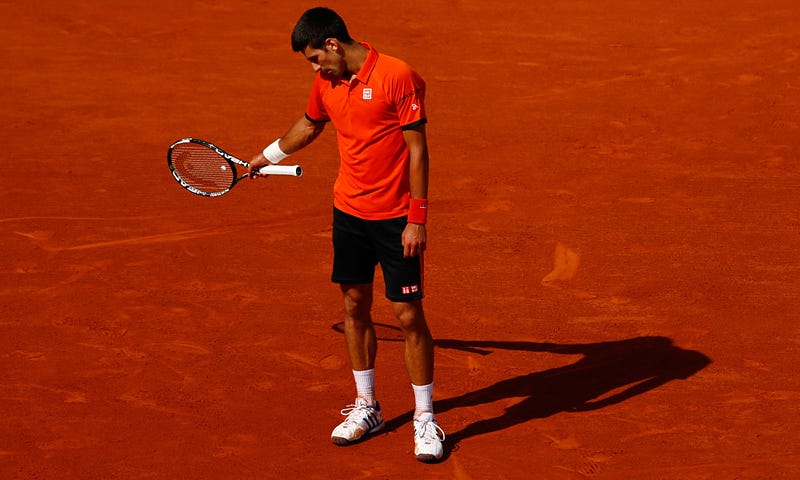
I read a very interesting article about Boris Becker and other tennis players who use chess to anticipate their opponents moves as well as improve their own offense. After his tennis career ended, Boris played against chess Grand Master Garry Kasparov on Larry King Live on CNN in March 2000. Boris is currently coaching ATP Mens World #1 Novak Djokovic. Novak's game has benefited from improved strategy and holds a nearly 2 to 1 points advantage 16,585 to 8,945 over world # 2, Andy Murray

I kept reading more about the relationship between tennis and chess. It is closer than what I previously had thought. Hungarian-American physics professor Arpad Elo developed the competitor-versus-competitor ranking system to rank chess players. It is known as the Elo Rating System. Some tennis statisticians have started using chess ranking metrics to rank tennis players. Nate Carter cites a chart in his article titled "No DJoke Novak Djokovic is the greatest tennis player of all time. You just don’t know it yet……"
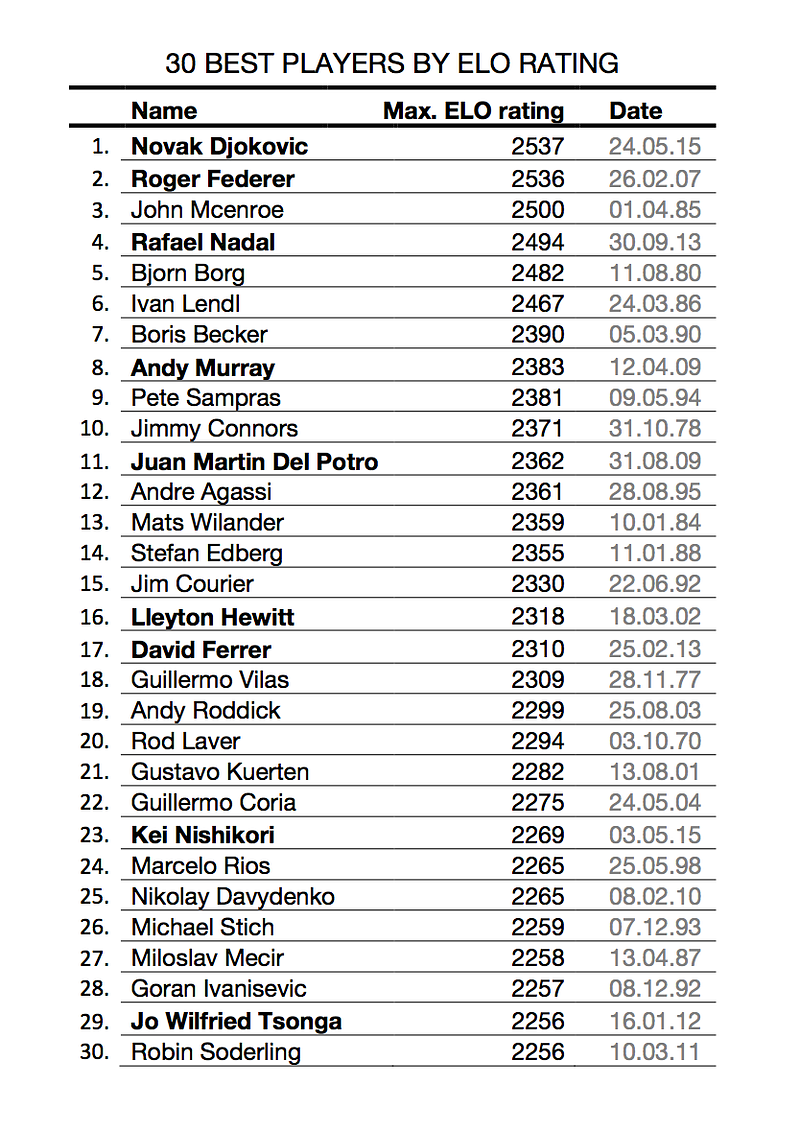

Novak is in some impressive company on all surfaces. Peter Schindler of the Imperial College London wrote a Masters Thesis titled "A Better Ranking System & An In-Play Probability Analysis". Schindler provides Surface Elo ratings on Page 24 on screen (or Page 19 of the PDF).

Clay : Djokovic leads Nadal 6,877 to 5,822.
Hard : Djokovic leads Federer 6,894 to 5,919.
Grass : Djokovic leads Federer 6,746 to 6,180.

The Case for Novak Djokovic ... and Roger Federer ... and Rafael Nadal provides longer term analysis.

Player                 Year   Elo  
Novak Djokovic         2015  2525  
Roger Federer          2007  2524  
Bjorn Borg             1980  2519  
John McEnroe           1985  2496  
Rafael Nadal           2013  2489  
Ivan Lendl             1986  2458  
Andy Murray            2009  2388  
Jimmy Connors          1979  2384  
Boris Becker           1990  2383  
Pete Sampras           1994  2376  
Andre Agassi           1995  2355  
Mats Wilander          1984  2355  
Juan Martin del Potro  2009  2352  
Stefan Edberg          1988  2346   Guillermo Vilas        1978  2325

Overall : Djokovic leads Federer 2,525 to 2,524.
Clay : Nadal leads Borg 2,550 to 2,475. Djokovic is in third at 2,421.
Hard : Federer leads Djokovic 2,453 to 2,418.


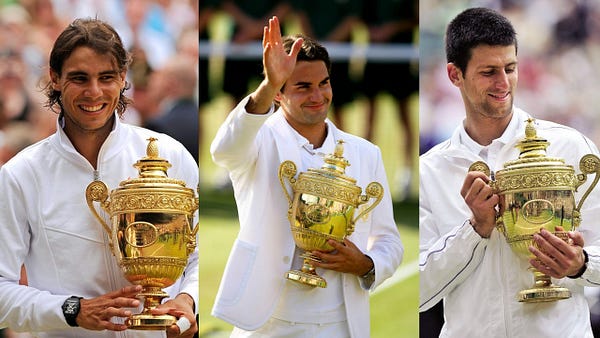
On a related note, this is a list of opponents that Federer, Nadal, and Djokovic have beaten in their first 10 grand slam victories. 


Federer Column1 Nadal Column2 Djokovic Column3
# of Slams Opponent Won Opponent # of Slams Opponent Won Opponent # of Slams Opponent Won Opponent
0 Phillippousis 0 Puerta 0 Tsonga
2 Safin 17 Federer 2 Murray
1 Roddick 17 Federer 14 Nadal
2 Hewitt 17 Federer 14 Nadal
1 Roddick 17 Federer 14 Nadal
8 Agassi 17 Federer 2 Murray
0 Baghadatis 17 Federer 17 Federer
14 Nadal 0 Soderling 2 Murray
1 Roddick 0 Berdych 17 Federer
0 Gonzalez 10 Djokovic 17 Federer


Notes : 
I developed the chart above after reading an online discussion of a Peter Bodo article “Novak Djokovic, Roger Federer at heart of ‘great’ debate". "Ja Car” listed Federer's and Djokovic's first 10 slam victories. I added # of Slams Opponent Won as well as Nadal’s list.

Nadal may have had the toughest road in beating Federer in 6 of his first 10 slam victories. Nadal beat Puerta, Soderling, and Berdych who didn’t a slam, respectively. Nadal beat Djokovic in the 2010 US Open for his 10th slam; I had a ticket for that match but it was rained out on Sunday. Since I had to work on Monday, I sold my ticket. I am so grateful that the US Open is building a roof over Arthur Ashe Stadium because I have lost so much time in rain delays over the years. 

Djokovic also had a tough path in beating Nadal, Federer, and Murray three times each and Tsonga once. I attended Djokovic’s 2015 US Open victory over Federer and Federer’s 2007 US Open victory over Djokovic in person. 

Federer may have had the easiest path (relative term) in beating Phillippousis, Baghadatis, and Gonzalez who never won a slam respectively. Federer beat Roddick three times and Roddick only won 1 slam, the 2003 US Open. Federer beat Safin and Hewitt one time each. Safin and Hewitt won two slams respectively. I attended Federer’s 6-0, 7-6, 6-0 victory over Hewitt at the 2004 US Open; it was impressive and clinical.  

In Slam Victories, 11 – 17, Federer beat Murray three times, and beat Nadal, Djokovic, Soderling, and Roddick once each. Soderling never won a slam but was the first man to beat Rafa Nadal at Roland Garros. 

In Slam Victories 11 –14, Nadal beat Djokovic three times and David Ferrer once.  

I developed this chart after reading an online discussion of a Peter Bodo article “Novak Djokovic, Roger Federer at heart of ‘great’ debate". "Ja Car” listed Federer's and Djokovic's first 10 slam victories. I added # of Slams Opponent Won as well as Nadal’s list.

FiveThirtyEight.com's Carl Bialik and Benjamin Morris published this article titled "Djokovic And Federer Are Vying To Be The Greatest Of All Time" on ESPN.com on September 13, 2015, hours before the Mens Final between Djokovic and Federer. 

morris-bialik-mens-tennis-elo-2 (1)


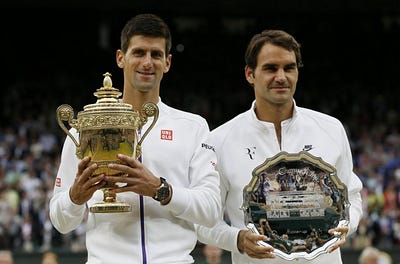
Djokovic and Federer played later on in the evening of September 13, 2015, in a historic US Open Final. It was historic because if Federer won, he would have won 18 slams to Djokovic's 9, a 2 to 1 ratio, which would have been difficult to overpass. Since Djokovic won, he now has 10 slams and Federer still has 17 slams.

Furthermore, Djokovic played under the most difficult of conditions. The vast majority of fans were for Federer and they booed Djokovic at every possible turn from Djokovic slipping and falling early during the first set to shouting during his service game. I attended the match and couldn't believe hearing "Fault" and "Double Fault" from some Federer fans. My photo album of the match and trophy presentation are here.

After Djokovic's victory, some commentators started to ask if Djokovic can pass Federer.  For example, respected tennis journalist David Law has a podcast titled "Djokovic ‘Could Catch’ Federer" on September 13, 2015.

ESPN's Simon Barnes wrote

"Djokovic is probably the finest player who has ever played. That is to say, if the players from former eras were to take him on with the weapons they possessed at their peak, they would all lose."


Barnes' praise is in the footsteps of others. In June 2013, Hall of Fame Coach Nick Bollettieri calls Novak Djokovic the "most complete player, ever".

While Djokovic was getting consideration for GOAT (Greatest Of All Time), others were asking if Djokovic had the best year ever. ESPN's Brad Gilbert asked who had the best 3 Seasons in the ATP Era (1973-present) on Twitter on October 17, 2015. I replied to Gilbert as follows (1) 2015 (2) John McEnroe 1984 (3) 2006. (Jimmy Connors' 1974 would have been 4th and Rafa Nadal's 2010 would have been 5th.)

McEnroe didn't play the Australian Open in 1984 as some players didn't at the time. Losing the Roland Garros Final to Ivan Lendl after leading 2 sets to love hurts McEnroe's case. Like Djokovic, Federer played in all 4 slam finals and won 3 of them. However, he did NOT win any titles on clay in 2006. Those were won by the King of Clay, Rafa Nadal.

"In 2006, Federer did not win a single title on clay, while Nole won both Monte Carlo and Rome. He became only the second man to beat Rafael Nadal at Roland Garros en route to the finals. Djokovic can now claim to be the best player in the world on all surfaces and in all conditions. Indoors, outdoors, hard court, clay, grass – you name it, he’s got it. In 2006, Federer couldn’t make this claim, because of The Bull:". This is excerpted from 6 reasons why Djokovic owns the best season of all time.

Djokovic won a record 6 Masters 1000 titles, 3 grand slam finals, and 11 of the 15 consecutive finals he won. The 15 consecutive finals broke Vytas Gerulaitis' record of 13 in 1977. The 11 titles surpasses the 8 titles that Federer won in 2006. Except for losing the quarterfinal in Doha to Ivo Karlovic at the beginning of the season, Djokovic made the final of every tournament. Ben Rothenberg tweeted these emojis for "Novak Djokovic at 2015 Slams, Masters, and WTFs:"

 πŸ¨πŸ†
 
   πŸŒ΄πŸ†
πŸ¬πŸ†
πŸŽ²πŸ†
πŸ‚—Skip
πŸπŸ†
🐌—Final
πŸ“πŸ†
🍁—Final
🎒—Final
πŸ—½πŸ†
πŸœπŸ†
πŸŽͺπŸ†
☔️πŸ†


Craig O'Shannessy of BrainGameTennis tweeted two incredible statistics.

Beat every Top 10 player.

Craig O'Shannessy ‏@BrainGameTennis  Dec 26
DOMINANT 2015 for - beat every top 10 player. Record v Top 10 Nole 31-5 15-6 12-10 9-8 7-11


2015 MASTERS RECORD Nole totally unconscious. A+. 39-2 30-5 22-9 21-9 20-9 16-6


Djokovic's historic campaign transcended sports. The New Yorker had an article titled "No Athlete Had a Better 2015 Than Novak Djokovic". Gerard Marzorati referenced other incredible performances from Stephen Curry, Jordan Spieth, Ronda Rousey, and others. Marzorati included a New York Times report by Christopher Clarey. Clarey's report was before Djokovic won the season ending World Tour Final for the 4th consecutive and fifth overall time in London. Djokovic broke Ilie Nastase's record of 3 consecutive wins. According to the ATP email update on November 22, 2015, Djokovic achieved this milestones.

 - World No. 1 Novak Djokovic becomes the first player in tournament history (since 1970) to win four successive titles and five overall, drawing him level with Ivan Lendl (1981-82, '85-87) and Pete Sampras (1991, '94, '96-97, 1999).
- The Serbian receives $2,061,000 in prize money and earns 1,300 Emirates ATP Rankings points.
- Djokovic finishes the year with an 11-4 record in finals (including three Grand Slams and six ATP World Tour Masters 1000 titles) and an 82-6 match record.
- Djokovic and third seed Roger Federer contested their fifth title match at the season finale and their 44th meeting (tied 22-22).
- Djokovic finished year-end No. 1 in the Emirates ATP Rankings for the fourth time in the past five years (2011-12, '13-15).

In addition to tying Federer at 22 victories each in the WTF Final, Djokovic tied rival Rafa Nadal at 23 victories each after winning their WTF semi-final match 6-3, 6-3. Nadal was effusive in his praise of Djokovic with a quote that "What Novak Is Doing Is Just Amazing"(Nadal leads Federer 23-11 in their Head-To-Head Rivalry.)

The Tennis Base ranked all seasons since 1877 and ranked Djokovic's 2015 as the best. The top 10 seasons are listed below.

Record: MOST TB POINTS END OF SEASON LIST


# Player Nationality Year Points

 1  DJOKOVIC, NOVAK  SRB 2015 19940

 2  FEDERER, ROGER  SUI 2006 18727

 3  GONZALES, PANCHO  USA 1956 18724

 4  LAVER, ROD  AUS 1969 18603

 5  ROSEWALL, KEN  AUS 1963 17838

 6  LAVER, ROD  AUS 1967 17072

 7  LAVER, ROD  AUS 1962 17005

 8  DJOKOVIC, NOVAK  SRB 2011 16521

 9  McENROE, JOHN  USA 1984 16190

 10  FEDERER, ROGER  SUI 2007 16082


Djokovic's 2015 was historic, incredible, and many other superlatives. For all his success on the court, Novak’s most important victory in 2015 is the joint World Bank – Novak Djokovic Foundation “Early Wins for Lifelong Returns” program. It will program up to $50 million in education and early childhood development funding in Serbia. World Bank Group President Jim Yong Kim is quoted as follows in the joint press release. 

“All children deserve an equal chance in life, yet millions fail to reach their full potential due to poverty, poor nutrition, and few opportunities for early learning and stimulation,” said Kim.“It gives me great pleasure to announce this new partnership with the Novak Djokovic Foundation, which will help reach these children and give them a fair start. Working together – with national governments like that of Serbia, partners such as UNICEF, civil society organizations and foundations, and champions like Novak Djokovic -- we can achieve early wins today that will yield incredibly high returns tomorrow, both for Serbia and for the world.”

I spent much of 2015 discussing tennis with my friend Mike King. I met Mike at the 2009 North Pole Marathon


Mike was one of the best sports photographers of his generation and even better person. Mike was a great Wimbledon photographer and we talked lots of tennis. His photos include Roger Federer, 4 images of Andy Murray in one photo, and John McEnroe.


Mike passed unexpectedly two days after our mutual friend and North Pole Marathon founder Richard Donovan finished his cross country run from San Francisco to New York City on Sunday, September 6, 2015. Mike's passing was very sad and hit us very hard.

I have been lucky to go to some Bucket List sporting events over the years. But, it doesn't hold a candle to the events that Mike was PAID to photograph. His iconic photos include but are NOT limited to Diego Maradona kissing the 1986 World Cup Trophy.


I started playing organizing soccer a few weeks after being inspired by Maradona's incredible victory. I wish I could tell Mike about meeting Pele last month and hope we can one day.

I referenced Boris Becker at the beginning of this post. I wanted to share this photo of Boris who was the last major sports star that Mike photographed at Wimbledon 2015.


Long live sport. Mike King, RIP.


Sources 

"Today the world has lost a beautiful soul," Andre Agassi about Robin Williams. By Mike Milazzo, San Francisco Examiner, August 12, 2014.

Tennis for the Mind Can Chess help you become a better tennis player? By Jo Carter, TennisHead.net.


ATP Singles Ratings, December 28, 2015.

Elo Rating System

No DJoke Novak Djokovic is the greatest tennis player of all time. You just don’t know it yet…… By Nate Carter, Medium.com, September 17, 2015.

"A Better Ranking System & An In-Play Probability Analysis". Peter Schindler's Master's Thesis, Imperial College of London, August 28, 2015.


The Case for Novak Djokovic … and Roger Federer … and Rafael Nadal. By Jeff Sackmann, TennisAbstract.com, September 18, 2015.  


Novak Djokovic Career Statistics on Wikipedia.


Novak Djokovic, Roger Federer at heart of 'great’ debate By Peter Bodo, ESPN.com, September 

16, 2015.

Djokovic And Federer Are Vying To Be The Greatest Of All Time By Carl Bialik and Benajamin Morris, FiveThirtyEight.com, 10:38 am, September 13, 2015.

2015 US Open Mens Final Photo Album By Tom Djurdjevich, FaceBook.com, September 13, 2015.

US Open - Djokovic ‘Could Catch’ Federer; Flavia's Fitting Finale The Tennis Podcact By David Law, iTunes.com, September 13, 2015.

Novak Djokovic is the greatest tennis player in history By Simon Barnes, ESPN.com, November 17, 2015. 

Bollettieri Calls Djokovic the Game’s Most Complete Player, Ever By David Cox, New York Times, June 24, 2013.


Started list from ATP beginning 1973 By Brad Gilbert with response by @Djurdjevich, Twitter.com, October 17, 2015.


6 reasons why Djokovic owns the best season of all time By Rob Cianfarani, TennisCanada.com, December 14, 2015.

Novak Djokovic at 2015 Slams, Masters, and WTFs: By Ben Rothenberg, Twitter.com, November 22, 2015.

Craig O'Shannessy of BrainGameTennis tweeted two incredible statistics.


Beat every Top 10 player. Craig O'Shannessy, Twitter.com, December 26, 2015.
Nole totally unconscious. A+. Craig O'Shannessy, Twitter.com, December 26, 2015.

No Athlete Had a Better 2015 Than Novak Djokovic By Gerald Marzorati, The New Yorker, Dec
Novak Djokovic Ascends Ever Higher, With No Clear Landing in Sight By Christopher Clarey, The New York Times, November 13, 2015.

Djokovic Wins In London By ATP Staff, ATP, November 22, 2015.


Rafa: "What Novak Is Doing Is Just Amazing" By ATP Staff, ATP, November 21, 2015.

Nadal leads Federer 23-11 in their Head-To-Head Rivalry. ATP.

Record: MOST TB POINTS END OF SEASON LIST The Tennis Base.


2009 Competitors, North Pole Marathon, April 7, 2009.
  
Richard Donovan's 3,200+ mile Trans North American Run NYC Finish By Tom Djurdjevich, FaceBook.com, September 6, 2015.

Tom Djurdjevich photo with Pele, Twitter.com, November 29, 2015.  


Mike King Remembered (1962-2015) By Tomislav Djurdjevich, TomislavDjurdjevich.Blogspot.com, September 9, 2015.


====================================================================


This is the entire article.

No DJoke


Novak Djokovic is the greatest tennis player of all time. You just don’t know it yet……


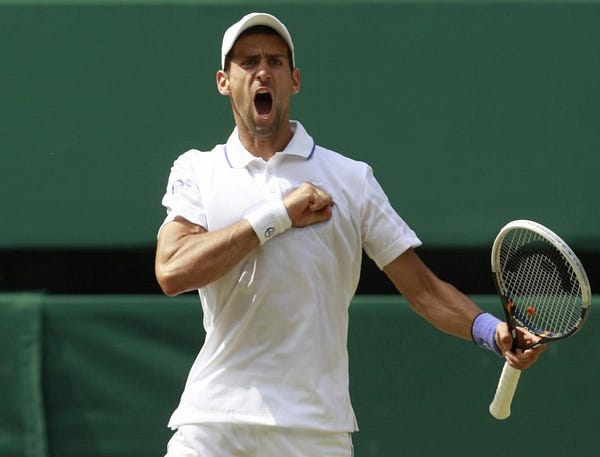
Novak Djokovic, the best tennis player in the world, turned to his wife and pointed at his heart. He had just won the US Open with no help from the crowd, who vivaciously cheered for his opponent, booing Djokovic, yelling during his service toss, and actively cheering when he double-faulted. Unlike Roger Federer and Rafael Nadal, those legends of our time who have enjoyed overwhelming support throughout their careers at virtually every tournament, Djokovic had to summon something from the inside. In the end, it just might make him the better player.

Novak Djokovic is the villain of the tennis world, so much so that his self-embraced nickname is “The Djoker,” a combination of Batman’s archenemy and Djokovic’s own early-career reputation for performing impersonations of other top players on tour. USA Today summarized it with the hysterically eloquent and simple headline, “No one likes Novak Djokovic.” By defeating Federer in the semifinals of the 2008 Australian Open, he ended a storied period of tennis that saw either Federer or Nadal in every Grand Slam final for three straight years (sometimes competing against each other). Djokovic would go on to win his first Grand Slam title at that Australian Open, but for the next three seasons, he continued to play third wheel to the dominance of Fed and Nadal. No one disagreed that he was one of the best players on tour, he just wasn’t at the level of the two players above him, with some seeing his first major title as nothing more than a one-time fluke. Federer and Nadal played their historic Wimbledon final later in 2008, and continued to dominate at every Major, with one of the two players winning every Grand Slam through the rest of 2008, 2009, and 2010 — the lone exception being Juan Martin Del Potro’s upset of Federer in the final of the 2009 US Open.


Then something clicked. Many attribute Djokovic’s breakout 2011 season to a gluten-free diet and an increased emphasis on conditioning, but there was something more compelling and unnerving about the way he played the game. His shot-making was magnificent. His mental toughness exceeded that of both Federer and Nadal on crucial points. He stretched for every inch, and seemed to push himself harder than two players that many considered the greatest of all time. In 2011, he won three of four Grand Slam tournaments and ascended to World No. 1 for the first time in his career. Altogether, since the beginning of 2011, Novak Djokovic has appeared in 15 Grand Slam finals, winning 9 titles, and bringing his overall total to 10. He has now held the World No.1 spot for 162 weeks, and has captured eight ATP World Tour Masters 1000 Series titles (and needs only to win the Cincinnati Open to become the first player to win all nine). A few elements of his game, including his return of service, two-handed backhand, and court coverage, are considered by many tennis experts to be the greatest of all time. Every component of his game is considered nearly flawless. Tennis coach Nick Bollettieri summarized by saying, “When you look at match players in the history of tennis, I don’t believe that anybody can equal everything on the court that Djokovic does. I don’t think you can find a weakness in his game. His movement, personality, his return of serve, his serve, excellent touch, not hesitant in coming to the net, great serve. Overall, almost every player has a downfall; to me he doesn’t have one. He’s perhaps the best put-together player that I’ve seen over 60 years.”


And yet, he remains hated by many in the tennis community, so much so that the the New York Times simply had to ask, “Why can’t Novak Djokovic get some respect?” The answer, of course, lies within the personal rivalries of the greatest players of his generation, Roger Federer and Rafael Nadal. As Djokovic told The Times, “At the beginning of my career, I was observed as a rebel, somebody who comes in the mix and starts to challenge the two guys that were so dominant. ‘Who is this guy from Serbia, small country, comes from nowhere and starts saying he can beat the top guys and become No. 1? Obviously, I understand the people’s reaction to that, but I felt that the only way for me to get out there was to show that I deserved to be there.”

This attitude, while making him a stronger competitor, unfortunately landed Djokovic with a “Lebron complex,” whereby people root against you, not only because you are currently the best, but because they feel your success is being measured against a beloved champion of the past. The only difference in tennis is that the “Michael Jordan” and “Lebron James” of this scenario have overlapping careers in which they have played each other 42 times, gotten into shouting matches with each other’s guest boxes in the stands, and generally don’t like each other’s company. The crowd in Arthur Ashe Stadium during Sunday night’s US Open final seemed to represent a microcosm of the tennis world, with most spectators hoping for the Michael Jordan of tennis to defy age and win that elusive 18th Grand Slam.

Instead, Djokovic won in 4 sets, in an environment that must have amounted to the closest thing a tennis player can experience to a road game. And much to the dismay of the crowd, he did it by simply being a better tennis player; one who, in 2015, appeared in all four Grand Slam finals, winning three, while very quietly putting together one of the most remarkable tennis seasons of the Open Era. At 28 years old, Djokovic is there; and whether you like it or not, “there” does not simply mean competing with Federer and Nadal — “There” means stopping legacies in their tracks, and possibly, dethroning the greatest of all time.

So why should Djokovic be in the conversation for greatest tennis player of all time?


For starters, we need to shed ourselves of the common notion that simply holding the most Grand Slam titles makes one the greatest, while holding the second most makes one the second greatest, and so on. While Grand Slam titles are still a solid indicator of career success, they’e not the only indicator. Jimmy Connors, for example, only won 8 Grand Slam titles (“only” being a very relative term here), but still holds Open Era records for overall singles titles (109 — still far in first place) and match wins (1254). Perhaps most famously, Ricardo “Pancho” Gonzalez, who played before the Open Era (when professionals were not allowed to play in traditional Grand Slam tournaments) only won 2 Grand Slams before turning professional, but then won an additional 15 Pro Slams while being ranked as the World No. 1 for a mind-boggling eight straight years. While certainly the case for many players before the Open Era, it is often thought that Pancho Gonzalez in particular would have won numerous Grand Slam tournaments had he been allowed to compete, with some estimates as high as 20.

The point being, we cannot say Federer is best, Nadal is the second best, and Djokovic is the third best based solely on their Slam counts (17, 14, and 10 respectively), especially while all three are still active players. There are a myriad of components to look at when considering the greatest, and their potential for future success is a key element of that analysis.

For now, it’s important to note that Novak Djokovic being ranked as the greatest player of all time is not a new concept. Currently, tennis ELO rankings, which factor in games, sets, and matches won against the rankings of a player’s competition to determine the best player at their peak, have Novak Djokovic in 2015 as the greatest player of all time, with Federer in 2007 ranked second.


As you can see, this model is somewhat flawed, as it only seeks to tell us who the best player was at their absolute peak, without looking at their career as a whole. This is why a 2009 Juan Martin Del Potro, for beating Roger Federer in his prime at the US Open, is ranked ahead of Andre Agassi. Del Potro is a great player and US Open Champion, but few will argue that the achievements of his career surpass that of Andre Agassi, arguably the biggest star the sport has ever produced. However, this is just one model, and it currently ranks Djokovic’s game as the greatest of all time right now, in this moment. It’s not the most efficient system, but it shouldn’t be dismissed.

Another important element of this debate is a player’s competition throughout their whole career (not just a specific time in their career, which the model above shows). Andre Agassi, for one, believes Roger Federer, Rafael Nadal, and Noval Djokovic are the three greatest players ever, simply because they have to play each other. However, when taking a close look at their records, this is also the exact reason why I believe Novak Djokovic is absolutely better than Roger Federer.
Before you throw something at me, let me explain…

While I respect the hell out of Federer, and I do consider him to be one of the top 5 players ever, I am of the opinion that his Grand Slam count is bloated and misleading in the GOAT debate (this is usually the moment when a Federer fan throws a chair at me). To understand this at a basic level, let’s look just at records in Grand Slam finals.

Roger Federer — 27 Finals — Record: 17–10

Rafael Nadal — 20 Finals — Record: 14–6

Novak Djokovic: 18 Finals — Record: 10–8

Roger Federer has obviously been to and won the most Grand Slam finals, and that can’t be argued. Nadal has the best win percentage in Grand Slam finals, though this stat is slightly skewed due to Nadal’s overwhelming dominance on clay (9 of his 14 wins are at the French Open, and he’s never lost a final there). Djokovic has the worst win percentage of the three, though you’ll see why in a moment. Let’s take a look at those exact same stats after we remove every other player on tour and compare their finals records just against each other.

Roger Federer — 12 Finals — Record: 3–9

Rafael Nadal — 15 Finals — Record: 10–5

Novak Djokovic: 11 Finals — Record: 6–5

As you can see, things have changed considerably. Nadal still looks dominant, having played in the most finals against the other two opponents, with the most wins and the best win percentage. Djokovic moves down slightly in this model, though he still maintains a winning record against the best players of his era.

As you can see, the player profile that completely changes is that of Roger Federer. Fed’s Slam final count gets reduced by more than half, while his record morphs into a losing scenario that is essentially a blowout. Consider this: All three of his wins against Djokovic or Nadal came before 2008, meaning he has not beat either player in a Grand Slam final in eight seasons. One of the arguments people quickly employ to defend Federer is that he is so much older than Djokovic and Nadal, and those players are beating up on him in the twilight of his career, but Fed’s struggle against them started when he 26…..


Roger Federer’s Grand Slam count is bloated and misleading, because he won a majority of his trophies in a transitional period in tennis when the competition was weaker. For example, four of his Majors came from wins over Andy Roddick, who, by his own admission, is the worst player to ever hold the World No. 1 ranking. In addition, two more Federer Grand Slam finals were won against players who never achieved a career high ranking greater than World No. 8 — Mark Philippoussis at Wimbledon 2003, and Marcos Baghdatis at Australian Open 2006 (and if anyone says they have heard of either of those players, they’re lying). He defeated Fernando Gonzalez at the 2007 Australian Open, who never achieved a ranking higher than World No. 5, and whose primary accomplishment is winning the silver medal at the 2008 Olympics in Beijing. If we include the 2009 US Open against Juan Martin Del Potro, which Federer lost, three of the players he faced in Grand Slam finals literally never made it to another Grand Slam final. His Career Grand Slam is intact only because he played Robin Soderling in the 2009 French Open final while managing to avoid Nadal, who succumbed to an injury-induced upset earlier in the tournament. Even his 2005 US Open title is slightly misleading — He beat Andre Agassi, certainly an all time great, but one who was 35 years old at the time and would retire from tennis by the next year.

I’m not trying to pick on Roger Federer. As is said time and again in all sports, you have to play the opponent in front of you, and Federer did that in dominating fashion for years. It’s not his fault that he came of age during this transitional period, but he did, and the moment his opponents began to approach his talent level, Federer’s dominance slowly dwindled. He has now won only one Grand Slam tournament in the last five years, and has lost his last three finals to Novak Djokovic.


Comparing Djokovic to Rafael Nadal is a little trickier, and relies more on a general consensus of where their careers are headed and their potential for more Grand Slams. I think most will agree, if Djokovic or Nadal had been facing similar opponents in the early part of their careers as Roger Federer, their Slam count would far exceed the numbers they are at now. Instead, they are contemporaries who have played each other in Grand Slams while fending off the sometimes brilliant Andy Murray (also 28 years old), who took at least two Slams away from Djokovic when he was playing at his peak from the Summer Olympics of 2012 to Wimbledon 2013. Djokovic and Nadal have both also lost a Grand Slam final to Stan Wawrinka, the 30 year old Swiss who has emerged as a top 5 threat later in his career. If being the greatest truly were about Grand Slams and Grand Slams only, the road for Nadal and Djokovic has been much harder.

As it currently stands on paper, Nadal has the superior resume, so much so that some analysts, using the argument above about Federer’s weaker competition, already see Rafael Nadal as the greatest player of all time. He is second on the Grand Slam list with 14 (tied with Pete Sampras), and has absolutely dominated Federer from the start. Their Grand Slam final record is 6–2 in Nadal’s favor, and their overall record stands at a staggering 23–10 in Nadal’s favor. Putting aside all arguments about Federer’s early competition, some don’t see Fed as the greatest of all time because there has been at least one player who has been consistently better than him his whole career.

Conversely, Nadal and Djokovic are not only evenly matched, but their rivalry has provided the largest sample size of any in the Open Era. They have played each other a record 44 times, with 13 of these matches in Grand Slam tournaments, including 7 Grand Slam finals. Currently, the rivalry dips slightly in Nadal’s favor at 23–21 overall, 9–4 in Grand Slam tournaments, and 4–3 in Grand Slam finals. Their matches produce notoriously high-caliber tennis, with John McEnroe commenting that the 2012 Australian Open final and 2013 French Open semi-final are the greatest matches ever played on a hard court and clay court, respectively.


To consider Djokovic the greatest of all time, he will have to fill a glaring hole in his resume; one that Rafael Nadal has almost single handily prevented — The French Open, and by extension, the Career Grand Slam. 7 of the 13 Nadal-Djokovic Grand Slam meetings have been at the French Open, where Nadal maintains a lopsided record, 6–1. Nadal, of course, is the greatest clay court player in history, has won 9 titles at Roland Garros, and lost only two matches at the tournament his whole career. However, one of those two matches was his last one in 2015, which he lost to Novak Djokovic.
The greatest hurdle to Djokovic’s argument for GOAT is beating Nadal at the French Open and winning the title. He completed step one in 2015, but still lost in the final to Stan Wawrinka. Djokovic though, is the best clay court player in the world right now, and if he can start consistently beating Nadal on clay, which he has shown he can do, there is no doubt he will eventually capture the title at Roland Garros.


Ultimately, the entire argument for Djokovic’s greatness falls squarely on his potential as a tennis player and athlete, as well as the current status of his best competition. Roger Federer, though playing remarkably this late in his career, is likely going to age out of the sport, and Djokovic has shown plainly that he can consistently beat Federer when it matters most at this point in their careers. Nadal, on the other hand, has a history of injury-proneness that is well documented (There are literally too many articles to link to for this; just google “Nadal injury-prone”). Many have argued that his aggressive style of play will weaken his body over time, and his career will not maintain the longevity of his opponents — an occurrence we are already watching. He did not win a Grand Slam in 2015 (his first year without a Grand Slam win since 2004), and his ranking has slipped to World No. 8.
Meanwhile, Djokovic has maintained a reputation as the fittest athlete in the world. Though Nadal found earlier success, especially on clay courts, his body seems to be giving out at the same time that Djokovic is finding new levels of energy. In 2015, he handed Nadal his second loss at the French Open, beat Federer in two Grand Slam finals, and was one win away from a Calender Grand Slam. His ATP points are so high that he could literally skip the entire fall indoor hard court season and still finish the year as World No. 1. Though a Calender Golden Slam seems unfathomable in today’s game, Djokovic will likely be the number 1 seed in every tournament he plays next year. If Nadal’s career slide continues, Djokovic will be the overwhelming favorite for all four Grand Slam tournaments, plus the Olympics in Rio de Janeiro.
So, now we play the hypothetical game…..


Let’s assume, as many tennis analysts do, that Roger Federer is done winning Grand Slams, and his record mark will remain at 17. As I’ve argued, I think that number is misleading, and in my mind Djokovic doesn’t have to better it to be considered the greatest ever, but let’s say that’s his goal. Some have asked if Nadal is also done, but for the sake of argument, let’s assume he wins 2–3 more and possibly equals Federer’s mark. That means Djokovic has to win 8 more Slams and hold a World No. 1 ranking for approximately 140 more weeks to pass Federer (he has already held the World No. 1 spot longer than Nadal). To do this, Djokovic needs to win two slams a year for four more years, until he is 32. That seems plausible, but as Federer has shown, even great players can have a dramatic drop-off after 30. While I do think Djokovic is in better shape and will be able to play at a higher level longer, I think he will need to accumulate the bulk of these Slams in the next two years. In that case, he’ll need to win 3 Slams a year for the next two years, and then just win two more slams after 30. At the level he is currently playing, it’s not hard to imagine him doing just that; but asking someone to win three Grand Slam tournaments a year for three straight years (including his completed 2015 season) is a lot to put on someone, even the best player in the world.
There are a few other things Djokovic can do during this time to earn the title of “Greatest of all time.” He has already beaten the greatest clay court player ever at the French Open, which Federer could never do. If he wins the 2016 French Open, that will make him the 8th man in history to capture the Career Grand Slam, and just the fourth to do so on three different surfaces (along with Agassi, Nadal, and Federer). If he can follow that up with a win at the 2016 Summer Olympics, that will give him the Career Golden Slam, which Federer never achieved. At that point, depending on what happens at Wimbledon and the Australian Open, he could have 11–13 Grand Slam titles, plus the Career Golden Slam.
From there, it becomes a matter of just how high he can go. If he wins two French Opens, that will give him the Career Double Slam (winning all fours Grand Slam tournaments at least twice), which hasn’t been accomplished since Rod Laver completed his Double Slam in 1969. Assuming he continues to win at his 2015 rate, and his World No.1 ranking remains intact, it’s not outrageous to discuss the possibilities of a Career Grand Slam, a Career Golden Slam, or a Career Double Slam, (though highly unlikely, if he accomplishes a Calendar Golden Slam in 2016, I’ll call him the greatest player of all time with no hesitation).


The beautiful thing about tennis is that nothing is guaranteed, and probably the greatest aspect of the Federer-Nadal-Djokovic “trivalry” is that any one of them can beat the other on any given day. Last month, at the Cincinnati Open, I watched in person as Roger Federer walked over the competition and demolished Novak Djokovic in the final without allowing the greatest service returner in history a break point. At the time, it seemed like Federer had found a new level and simply couldn’t be beat. Then he ran into Djokovic again.

Novak Djokovic could sustain an injury; he could lose his focus; he could go through personal issues, or just plain lack the motivation to do the things I’ve discussed. Rafael Nadal could experience a career resurgence and show us all how dominate he once was. Andy Murray could reignite his desire and challenge them both while increasing his own Slam count. Other top 10 threats could rise to the occasion and pull upsets — David Ferrer, Tomas Berdych, Juan Martin Del Potro, Jo-Wilfried Tsonga — all Grand Slam finalists who are more than capable of winning big matches. And yes, until he retires, there is no one on Earth who believes that Roger Federer doesn’t have it in him to win one more Grand Slam.

Novak Djokovic doesn’t get the respect he deserves, and for now, he seems to be okay with that. But as soon as one year from today, there could be a major shift in the GOAT debate, and the crowds of Arthur Ashe stadium may find themselves regretting their contempt for a man who has already altered the history of tennis . After Djokovic was accused of faking injuries early in his career, Roger Federer publicly stated, “I think he’s a joke.” That “joke” has now actively halted Roger Federer’s legacy-building, and has made it clear he has the talent to make history of his own.
In the end, the Djoker just might have the last laugh…
Nate Carter

Tuesday, October 27, 2015

2015-2016 NBA Predictions

Flip Saunders’ passing from cancer casts a big shadow over the start of the NBA season tonight. It  usually is one of my favorite times of year as my cousin Mirko, his best friend Lubo, and I make our pre-season picks. There’s no money involved, only love of the game and some bragging rights. Flip’s passing hits closer to home as Lubo’s friend, Zarko, is Director of International Player Personnel and a scout for the Minnesota Timberwolves. Flip Saunders, RIP.

With a heavy heart, these are my fearless picks for the NBA season.

Eastern Conference :
(1) Cleveland
(2) Atlanta
(3) Chicago
(4) Miami
(5) Toronto
(6) Milwaukee
(7) Boston
(8) Washington

Dark Horses : Indiana, Detroit, Orlando.

We’ll see how Porzingis plays for the Knicks and Carmelo’s return from injury. If the Knicks gel quickly, they can make a playoff push.

Eastern Conference Champion : Cleveland.


Western Conference : This is much harder to pick.
(1) Golden State
(2) Oklahoma City
(3) San Antonio
(4) Los Angeles
(5) Houston
(6) Memphis
(7) New Orleans – I would have ranked them higher if it weren’t for injuries.
(8) Utah

Dark Horses : Sacramento, Dallas, Phoenix.

Western Conference Champion : Oklahoma City. I considered Golden State, Clippers, and San Antonio in this position. Last season’s first round playoff between the Clippers and Spurs was a conference or NBA quality final. The playoff drawing is critical to who survives the West.

NBA Champion : Cleveland. A healthy Kyrie and Love will help LeBron bring an NBA Championship to long suffering Cleveland fans.

Wednesday, September 9, 2015

Mike King Remembered (1962-2015)

Mike King was a great friend who passed suddenly on Tuesday, September 8, 2015. I met Mike at the 2009 North Pole Marathon.


Mike was the official race photographer and took some incredible photos. My favorite from the 2009 North Pole Marathon was of Ted Jackson looking like the Abominable Snowman. It made the front page of the Sun in London. Going to the exact North Pole was a memory I'll never forget.

I have been lucky to go to some Bucket List sporting events over the years. But, it doesn't hold a candle to the events that Mike was PAID to photograph. His iconic photos include but are NOT limited to Diego Maradona running, Jurgen Klinsmann falling in the 1990 World Cup, and Diego Maradona kissing the 1986 World Cup Trophy


Mike was a great Wimbledon photographer and we talked lots of tennis. His photos include John McEnroe, Boris Becker, Roger Federer, Rafa Nadal, 4 images of Andy Murray in one photo.

His last major photo was of Boris Becker before 2015 Wimbledon. Boris was late after Novak Djokovic lost a Boodles Exhibtion match to #NextGen star Sascha Zverev. Novak righted the ship and beat Roger Federer in their second straight Wimbledon Final.


He photographed Haile Gebrselassie in Track and Field. I hope FIFA moves the 2022 World Cup to the North Pole Soccer instead of Qatar.

In addition to sports, Mike photographed the Global Seed Vault in Norway, the Queen Mum, weddings, the 21st century Starsky and Hutch (AKA Richard Donovan and Fearghal Murphy), and old British soldier. Mike also took moving pictures of the 2015 remembrance of British soldier Lee Rigby who was murdered near Mike's flat in London. This was a very moving photo of flowers at the crime scene. We discussed that quite a bit as it shook us both. He photographed a gang members in the "Harry Brown" movie starring Sir Michael Caine.

These are some tributes from his colleagues.

Award-winning photographer Mike King has died

“No agenda, no attitude”: Mike King the Master Craftsman of Sports Photography

Video tribute by Philip Brown.

For more incredible photos, please visit Mike's Photostream on Flickr

Mike's passing was way too soon. I hope there is a rainbow wherever he is. Mike King, RIP.

Saturday, August 29, 2015

Hurricane Katrina (August 29, 2005) Remembered

Hurricane Katrina struck the Gulf Coast starting on August 29, 2005. It claimed at least 1,245 lives and caused $108 billion in damage. I had traveled to New Orleans in February 2002 for Mardi Gras and had a great time with college friends, Bay Ridge Bob and Howard. We had committed to going to New Orleans about a month before September 11th. After September 11th, we weren't sure if we should go but I am glad we went. It was a much needed trip.

Hurricane Katrina was a day after my aunt (Strina Radojka) died suddenly on August 28. Radojka was a real nice lady and my favorite aunt on my Dad's side. Since she died in Europe, my cousins argued whether to bury her Upstate next to my uncle Dragan or in Europe. I reached out to a Chicago funeral home to bring her back to the States but they decided to bury her in Europe.

The photos and video from New Orleans and the Gulf Region were devastating. People were housed in the New Orleans SuperDome where the Saints play in the NFL.

 hurricane_katrina_evacuees_houston_astrodome.JPG


I had three friends from the 2005 Antarctica Marathon and wanted to do something to help them and others in the region. I emailed friends and colleagues at work to raise money and clothes. Since the law firm I worked for was raising money for the Red Cross, I got called down to Human Resources. I was told that I could do fundraising and clothes collection on my own but nothing through the daily intra-firm email newsletter. I didn't have much choice and went back to work.

My friends and colleagues at work were great. We collected boxes of clothes. The Mail Room sent the boxes to Sadat's (a summer intern's) fraternity house north of New Orleans in Lafayette. Using GoogleEarth, we mapped out a way to use back roads to get the clothes to New Orleans. Marilyn bought three separate knapsacks and packed them full of toiletries and other supplies. Gil, Medford Bob, and others chipped in. It was really uplifting especially after my HR meeting.  

I divided the money collected into in 3 US Postal Service (USPS) Money Orders. I know the Post Office gets criticized often but Money Orders is the best way to really send money especially when physical addresses are flooded out. They are inexpensive to insure (less than $1 each) and you can cash them at any Post Office in the country. No need to worry about out of state checks which take days or longer to clear. I sent the Money Orders to Lisa in Houston. She met up with Rudy outside of New Orleans and he distributed the clothes, knapsacks, and USPS Money Orders to Bill and John. John barely escaped the flooding in St. Bernard Parish. John was able to relocate through his job to North Carolina. Bill stayed with family in Indiana. Rudy stayed with family near New Orleans.

Lessons Learned : Each catastrophe requires action but adaptability to the circumstances at hand. USPS Money Orders worked best in New Orleans. When Aunt Radojka traveled from NYC to the former Yugoslavia during the 1990s civil wars and NATO Bombing, we used to give her cash money with x amount this cousin, y amount for that uncle, and so. When earthquakes hit Nepal, I went to the nearby bank branch and spoke with a banker there. He said the fees would be high (16 percent) for Ngima plus bank wire fees of $45. He recommended Western Union. I checked Western Union's website to send money to Nepal.  If there are issues with that link, this is Western Union's homepage. Since that time, our mutual friend Steve has organized a separate GoFundMe fundraiser to rebuild Ngima's home as he has been living in tents for the last few months.


When Hurricanes Irena and Sandy hit NYC in 2011 and 2012, I had my own gear ready extended periods of loss of electricity. Batteries, water, first aid kits, and flashlights come to mind. Communication is also key. I have had different ShortWave radios ever since I was a kid. I fondly remember a boom box with 2 tape decks, AM/FM, and ShortWave in the mid 1980s. I now have a C.Crane SkyWave AM, FM, Shortwave, Weather and AirBand Portable Travel Radio. I can put it in my pocket and carry it onto the Subway when I go to work. It is better for listening than two way transmission. 
 
After the Haiti Earthquakes in 2010, I received this important shortwave radio information from my friend Liz in Canada.

"... We are still keeping watch on 7045 kHz hoping that someone in Haiti may have access to a transceiver and at least a car battery to run it. ...

"Radio amateurs are requested to keep 7.045MHz and 3.720MHz clear for any emergency traffic resulting from the Earthquake which struck Haiti on 12th January 2010 in case any Haitian hams manage to get on the air, and in case of other related events in surrounding areas, including aftershocks. ...

"... Following the advice of the geophysicists, we are keeping the 7045 and 3720 kiloHertz frequencies active until further notice. ..."


I am grateful to my friend Lila for passing along the shortwave information to International Orthodox Christian Charities (IOCC) and others on the ground in Haiti. After being trapped for 50 hours, two aid workers were rescued by shortwave radio operators.   

Regarding Haiti, I am appalled by the Red Cross collected USD $500 million (Half a Billion Dollars) but only built 6 houses in the last 5+ years. That's an average of about $83 million per home. Did they build "Papa Doc" and "Baby Doc" Duvalier style mansions? 
  
Bottom Line : That's why I prefer to donate direct whenever disaster strikes, e.g. relatives in the former Yugoslavia, Ngima in Nepal, and elsewhere. My friend Fiona is a nurse and has gone on medical missions to Haiti which were sponsored by a Florida Church. If you don't know anyone directly affected by a disaster but want to help, go to the closest Rotary and see if they directly know a family or village in need.  


ShortWave Radio Information


My friend Sam is a long time member of ham radio community and this is his advice. 


"For portable gear in that same form-factor I would be tempted to use the same radio or if you want something a little better the Sony ICF-SW7600GR is a very good, well known, well respected radio.  I bought my parents an earlier version of this radio (ICF-SW7600) back in the late 80’s. They still have it, it works as good as new and when I’m visiting with my folks I use it for general shortwave listening and listening to European long wave broadcasts.  There is a page here that describes the different variations of the 7600.

"The 7600 is also useful for 'sideband' reception.  There are few broadcast stations that use sideband but the majority of amateur radio voice transmissions are on sideband. Also on sideband are military and aircraft transmissions and when you listen to sideband on a receiver without sideband capabilities you just hear a 'Donald Duck' sort of voice.  If you tune your C.Crane radio to some amateur voice frequencies. E.g. 3600-4000 kHz, 7100-7200 kHz, 14150 – 14350 kHz you will hear this activity but without a receiver that receives sideband you can’t tell what is being said.   The 7600GR also has a 'synchronous detector' which helps eliminate some of the audio distortion that invariably occurs when a shortwave broadcast signal fades.

"The ICF-SW7600GR would also be good for use at home but if you listen on a regular basis some people find the smaller radios a little frustrating to operate since there is little weight to them and the controls aren’t as nice as a desktop model.  You typically get much better sound out of a desktop unit. A desktop unit that’s been around for a while is the ICOMIC-R75. Icom also makes amateur radio and business radio gear.

"There are also wideband 'black box' receivers that are very interesting and that plug into your computer and you operate the receiver from the computer – the black box doesn’t have much more than an on-off switch.  Here’s an example  : http://www.universal-radio.com/catalog/widerxvr/1501.html

"Another very important thing is your antenna … You may be able to hear many of the stronger stations on a built-in whip antenna but you really need to get a proper antenna up for reliable reception especially of weaker stations."

Saturday, August 15, 2015

2003 Blackout Revisited - Are we ready for the next blackout?

The Blackout of NYC, much of the United States, and parts of Canada took place on August 14, 2003. I was working at a downtown Manhattan law firm at the time and thankfully lived near the office. Given that I worked in IT, I stayed late to try to see what contingencies we could undertake. I went home to try to take a brief shower and then back in early the next day.

Front cover on August 15th, 2003

Unfortunately, the power grid still needs to be upgraded and more secure, particularly if an EMP - Electormagnetic Pulse attack from a rogue state or non-state actors. A US government commission was convened.

There is also the risk of a natural solar flare. "On July 23, 2012, a massive, and potentially damaging, solar superstorm (solar flare, coronal mass ejection, solar EMP) barely missed Earth, according to NASA.[4][5] There is an estimated 12% chance of a similar event occurring between 2012 and 2022.[4]" (I'll post that link in the comments.)


Dr. Gary Null discusses solar flares with expert Matthew Stein

To get prepared for a future blackout, please visit Mr. Stein's website. The government still lags far behind Mr. Stein's efforts.


Sources

http://nypost.com/2003/08/?post_type=cover


http://www.empcommission.org/

 
https://en.wikipedia.org/wiki/Solar_flare

http://thegarynullshow.podbean.com/e/the-gary-null-show-preparedness-for-solar-storm-with-matthew-stein-071514/

http://whentechfails.com/
 

Tuesday, August 4, 2015

Remembering the Storm Victims in the Largest Ethnic Cleansing in the 1990s Yugoslav Civil Wars

Remembering the 14,000 Serb civilians killed by the Croatian Army, NATO, and MPRI in Operation Storm (Oluja) on August 4-7, 1995.

"Upwards of 180,000 Serbs would flee the province under duress, the worst single incident of ethnic cleansing in the entire sequence of Yugoslav wars," R. Craig Nation, a historian at the U.S. Army War College, wrote about Operation Storm in his study "War in the Balkans, 1991-2002." Dr. Nation was quoted in the Chicago Tribune regarding a lawsuit brought against Military Professional Resources Inc (MPRI) in US Federal Court. MPRI executed Storm in coordination with the Croatian Army and NATO. MPRI was a mercenary company that preceded Blackwater (formerly Xe and currently Academi).


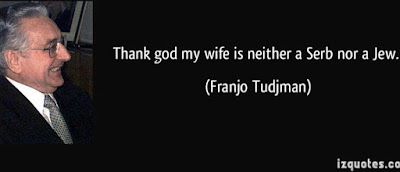
By the end of Operation Storm (Oluja), Croatian President Franjo Tudjman completed the Final Solution of an ethnically pure Croatia free from Serbs, Jews, Romas (Gypsies) and others. The Final Solution was started by the Nazis and their WWII Croatian Ustasha allies. 80 to 90 percent of Jews, 90 percent of Roma, and about half of Serbs were killed during WWII. At the beginning of the Yugoslav civil wars in 1991, there were 10 percent or about 400,000 Serbs left in Croatia. In the 2001 Croatian census, there were 380,000 fewer people than there were in 1991. 

Tudjman never hid his hatred of Jews nor Serbs.


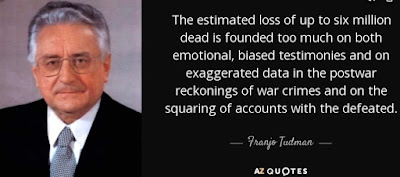
Tudjman was also a Holocaust denier. He denied that 6 million Jews were killed in WWII.


The Zagreb Helsinki Committee reported, "Virtually all Serb villages had been destroyed.... In a village near Knin, eleven bodies were found, some of them were massacred in such a way that it was not easy to see whether the body was male or female." (9) "Krajina Operation: Helsinki Committee Member Describes Atrocities in Krajina," BBC Summary of World Broadcasts, 25 August 1995. 


Richard Holbrooke “...junkyard dogs...” quote and Croatian Census data courtesy of RT.


British journalist Robert Fisk reported the murder of elderly Serbs, many of whom were burned alive in their homes. He adds, "At Golubic, UN officers have found the decomposing remains of five people... the head of one of the victims was found 150 feet from his body. Another UN team, meanwhile is investigating the killing of a man and a woman in the same area after villagers described how the man's ears and nose had been mutilated." (11) "Croats Slaughter Elderly by the Dozen," Robert Fisk, op. cit.


Photo courtesy of RT.

Petr Vales and Ludek Zeman were 2 Czech UN peacekeepers who were also killed during Operation Storm in addition to the aforementioned Serb civilians. Condolences to their families. 


Since links sometimes disappear for various reasons (hacking, legacy, etc.), I am including the entire texts of Neboja Malic's "Remembering the Storm" and "The Invasion of Serbian Krajina" by Greg Elich. 


Sources

The Invasion of Serbian Krajina by Greg Elich. Emperors Clothes. 
War in the Balkans, 1991-2002 by Dr. R. Craig Nation, a historian at the U.S. Army War College.
http://www.strategicstudiesinstitute.army.mil/pdffiles/PUB123.pdf

Serbian immigrants seek answers about the horror Class-action suit: U.S. mercenaries were behind Croatian offensive in Balkan War By Ron Grossman, Chicago Tribune reporter, on September 05, 2010.


The Invasion of Serbian Krajina by Greg Elich. Emperors Clothes. I quoted two of his sources, BBC in # (9) and Robert Fisk in # (11) .

"Virtually all Serb villages had been destroyed.... In a village near Knin,eleven bodies were found, some of them were massacred in such away that it was not easy to see whether the body was male or female." (9) "Krajina Operation: Helsinki Committee Member Describes Atrocities in Krajina," BBC Summary of World Broadcasts, 25 August 1995.

(11) "Croats Slaughter Elderly by the Dozen," Robert Fisk, op. cit.


===================

Nebojőa Malić wrote this in 2005 but it is as true then as it is today. Vechnaja Pamyat! (Memory eternal to the victims!)

http://original.antiwar.com/malic/2005/08/04/remembering-the-storm/


Remembering the Storm
by , August 05, 2005
Anniversary of a Victorious Crime
In the early morning hours of Aug. 4, 1995, on the heels of an incessant artillery and air bombardment, some 200,000 Croatian troops moved in to “liberate” Krajina, a stretch of mountains inhabited by Serbs who had rejected Croatia’s secession from Yugoslavia four years prior. Overrunning the token UN observation posts, the U.S.-trained Croatian army quickly overwhelmed localized Serb resistance. President Franjo Tudjman declared Aug. 5, the day Croat troops entered the Serb capital of Knin, a national holiday: “Homeland Thanksgiving Day.” By Aug. 7, the “Republic of Serb Krajina” was no longer in existence.

A grand celebration is scheduled for tomorrow in Knin. Prime Minister Ivo Sanader, the late Tudjman’s political heir, will no doubt give a rousing patriotic speech, glorifying Croatia’s “defenders from Serbian aggression.” Some mainstream media will report that the offensive resulted in civilian casualties, and that one high-ranking Croatian general, Ante Gotovina, is a fugitive from war crimes charges at the Hague Inquisition. And that will be the end of it. Dwelling on “Operation Storm” (Oluja) serves no purpose in the official narrative of the Balkans wars. Its victims are that narrative’s principal villains, so their suffering must be suppressed. The victors, on the other hand, are no longer useful to the Empire. “Storm” is something Washington would like to forget. Serbs and Croats don’t have that luxury.

Frustrated Dreams
The area of Krajina was for several centuries the borderland between the Hapsburg and Ottoman empires, a buffer zone that protected the inner Hapsburg lands from Turkish raids. It was populated largely by Orthodox Serbs, who had fled Ottoman persecution, and who became frontiersmen for the Hapsburgs in exchange for land and liberty. By the 19th century, the Ottoman Turks were in retreat; the new danger to the Hapsburg Empire was Slavic nationalism. Vienna turned on its frontiersmen, encouraging conflict between the Orthodox Serbs and the Catholic Croats, who became its staunchest supporters. Vienna’s Serbophobia eventually led Austria-Hungary into a fatal conflict that destroyed much of European civilization.

 It also nurtured the hatred that would explode in 1941 as the vicious Ustasha genocide. These homegrown Croatian Nazis, led by Ante Pavelic, set out to destroy the “race of slaves” (A. Starcevic) with ruthless abandon, but ran out of time. Still, by 1945 they had killed anywhere between half a million and 750,000 Serbs.

With the end of communism in 1990, Franjo Tudjman and his Croatian Democratic Union (HDZ) brought a revival of Pavelic’s symbols and vocabulary. Some of the top supporters of the HDZ were Ustasha Γ©migrΓ©s. Tudjman himself expressed relief that his wife was “neither Serb nor Jewish.” Tudjman’s constitutional reform redefined the republic as a nation-state of Croats, with Serbs as an ethnic minority. When Tudjman’s government declared independence from the Yugoslav federation in 1991, most Serbs saw 1941 all over again. This – and not some imaginary “aggression” from Serbia – was the root of their “rebellion,” and the genesis of the Krajina Republic. After several months of bitter fighting, marked by massacres, ambushes, and the most vitriolic propaganda, the UN brokered an armistice. The so-called Vance Plan envisioned four “protected areas,” with a Serb majority, whose eventual status would be resolved through negotiations.

Over the next three years, Tudjman’s government feverishly prepared for war, training its troops on the battlefields of Bosnia and staging quick, limited offensives at the strategic edges of UN-protected areas (most infamous being the Medak Pocket attack in 1993). Although enjoying political, diplomatic, and even military support from Vienna and Berlin since 1991, it was only when it got Washington’s support that Zagreb was ready – and able – to strike. “Retired” American officers, working for government contractor MPRI, claimed to teach Croat officers “democracy” and “human rights.” The events of May and August 1995 would demonstrate MPRI’s definitions of both.

Junkyard Dogs
"Dick: We ‘hired’ these guys to be our junkyard dogs because we were desperate. We need to try to ‘control’ them. But it is no time to get squeamish about things."
To End a War,
Chapter 6

US envoy to the Balkans Richard Holbrooke thus described the note slipped to him by Ambassador Robert Frasure, during a meeting with Croatian officials in 1995. Holbrooke’s own account of how the U.S. officially condemned Croatian attacks even as he was meeting with Tudjman and telling him which cities to take, suggests he was hardly “squeamish” about using Croats to fight what he – and hundreds of advocacy journalists, lobbyists, and policymakers – had termed “Serb aggression.”

On May 1, 1995, Croatian troops tested both their readiness and the UN’s will by staging a lightning strike at an exposed Serb enclave of Western Slavonia. The operation was code-named Bljesak – “flash,” or perhaps more appropriately, “Blitz.” The clear violation of the armistice went unpunished. The stage was set for Oluja.

According to Serb documentation, the three-day offensive in August 1995 resulted in the expulsion of 220,000 people. Some 1,943 people have been listed as missing/presumed dead, including 1199 civilians, 523 women, and 12 children. The death toll would have been greater had the Serbs not fled en masse before the advancing Croat tanks; all who stayed behind were killed. The Croats, and their American sponsors, were definitely not squeamish.

Ten years later, Krajina is still a wasteland, with “scattered ghost villages strewn with shell-scarred houses overgrown with ivy and tall grass” (Reuters). Only a tenth of some 400,000 Serbs who lived in Croatia before it seceded have returned, only to face bureaucratic abuse and frequent physical violence. Tudjman made Pavelic’s dream to rid Croatia of Serbs a reality. It seems everything is in the choice of allies.

Unpleasant Comparisons

After obliterating Krajina, the conquering Croatian army moved into western Bosnia, aiding the Izetbegovic government to crush a dissident faction led by Fikret Abdic and assisting in the major Muslim offensive that “coincided” with NATO’s massive bombing of Bosnian Serbs. But after the Dayton Agreement was signed and peace imposed on Bosnia, Empire’s junkyard dogs discovered the supply of Milk Bones had run out. They had served their purpose.

Today’s Croatia is frustrated that its ambitions to enter the EU and NATO hinge upon the capture of Ante Gotovina, a general involved in Oluja who is universally considered a war hero, but whom the Hague Inquisition accuses of war crimes. Some of the truth about atrocities against the Serbs is slowly coming to light, but interestingly enough, only after the prominent personalities accused have fallen out of political grace. The Zagreb leadership snaps back at any hint that Oluja might have been anything but just, right, and noble. When Serbian president Boris Tadic called it an “organized crime” in a statement Monday, President Mesic replied it could hardly compare to Serb crimes such as Srebrenica.

But by all means, let’s compare. In both cases, a UN “safe area” was targeted by the attack. In Srebrenica, the UN at least tried to protect Muslim civilians; in Krajina, it did no such thing. Serbs evacuated Muslim noncombatants from Srebrenica; Serbs who did not flee Krajina were killed. Yet Srebrenica is somehow “genocide,” while Oluja is a victory worth a national holiday?!

Another reason the Empire prefers to keep Oluja out of sight and out of mind is the push to establish an independent, Albanian-dominated Kosovo. If Croatia’s conquest of Krajina was legitimate, because Krajina’s existence violated its sacrosanct administrative borders, then why did Serbia not have the right to uphold its borders when it came to Kosovo? If obliterating the Serb population did not disqualify Croatia from keeping Krajina and Slavonia, how can the exodus of less than half of Kosovo’s Albanians disqualify Serbia from keeping Kosovo? If the Serbs, a constituent Yugoslav nation, did not have the right to ethnic self-determination in Krajina and Bosnia, how can the Kosovo Albanians (an ethnic minority) have one?

The “Abramowitz Doctrine”

This apparent paradox was “explained” by Morton Abramowitz, the eminence grise of U.S. foreign policy, in an interview last summer: “there is no entirely rational answer … you seek perfect reasoning, which does not correspond to reality on the ground.” Logic does not apply to the Empire, because it creates its own reality; where have we heard that before?

 The “reality” Abramowitz and his like-minded policymakers have sought to establish, by force, has been one in which, whatever the circumstances, Serbs are in the wrong. Apologists for the Empire dismiss this observable, verifiable fact as a “conspiracy theory” and claim the Serbs have a “victim complex,” even as their entire Balkans “reality” rests on the claim that everyone else has been victimized by Serbs.

What “perfect reasoning” is involved in recognizing the simple fact that the centuries-old Serb community in Krajina is practically extinct, and that the Serb community in Kosovo – from which most of their ancestors came – is facing the same prospect? Where the Nazis failed, the American Empire has succeeded. Is that really something to be thankful for?

=========

Url for this article is http://emperor.vwh.net/articles/elich/krajina2.html
Subscribe to our newsletter at http://emperor.vwh.net/MailList/index.php
Receive
articles from Emperor's Clothes Website
Click here to email the link to this article to a friend.
www.tenc.net * [Emperor's Clothes]
The Invasion of Serbian Krajina
by Greg Elich
[Mr. Elich is a freelance scholar who has written extensively about Yugoslavia.]

In early August 1995, the Croatian invasion of Serbian Krajina precipitated the worst refugee crisis of the Yugoslav civil war. Within days, more than two hundred thousand Serbs, virtually the entire population of Krajina, fled their homes, and 14,000 Serbian civilians lost them lives. According to a UN official "Almost the only people remaining were the dead and the dying." The Clinton administration's support for the invasion was an important factor in creating this nightmare.
The previous month, Secretary of State Warren Christopher and German Foreign Minister Klaus Kinkel met with Croatian diplomat Miomir Zuzul in London. During this meeting, Christopher gave his approval for Croatian military action against Serbs in Bosnia and Krajina. Two days later, the U.S. ambassador to Croatia, Peter Galbraith, also approved Croatia's invasion plan. Stipe Mesic, a prominent Croatian politician, stated that Croatian President Franjo Tudjman "received the go-ahead from the United States. Tudjman can do only what the Americans allow him to do. Krajina is the reward for having accepted, under Washington's pressure, the federation between Croats and Muslims in Bosnia." Croatian assembly deputy Mate Mestrovic also claimed that the "United States gave us the green light to do whatever had to be done." (1)

As Croatian troops launched their assault on August 4, U.S. NATO aircraft destroyed Serbian radar and anti-aircraft defenses. American EA-6B electronic warfare aircraft patrolled the air in support of the invasion. Krajina foreign affairs advisor Slobodan Jarcevic stated that NATO "completely led and coordinated the entire Croat offensive by first destroying radar and anti-aircraft batteries. What NATO did most for the Croatian Army was to jam communications between [Serb] military commands...." (2)

Following the elimination of Serbian anti-aircraft defenses, Croatian planes carried out extensive attacks on Serbian towns and positions. The roads were clogged with refugees, and Croatian aircraft bombed and strafed refugee columns. Serbian refugees passing through the town of Sisak were met by a mob of Croatian extremists, who hurled rocks and concrete at them. A UN spokesman said, "The windows of almost every vehicle were smashed and almost every person was bleeding from being hit by some object." Serbian refugees were pulled from their vehicles and beaten. As fleeing Serbian civilians poured into Bosnia, a Red Cross representative in Banja Luka said, "I've never seen anything like it. People are arriving at a terrifying rate." Bosnian Muslim troops crossed the border and cut off Serbian escape routes. Trapped refugees were massacred as they were pounded by Croatian and Muslim artillery. Nearly 1,700 refugees simply vanished. While Croatian and Muslim troops burned Serbian villages, President Clinton expressed his understanding for the invasion, and Christopher said events "could work to our advantage." (3)

The Croatian rampage through the region left a trail of devastation. Croatian special police units, operating under the Ministry of Internal Affairs, systematically looted abandoned Serbian villages. Everything of value - cars, stereos, televisions, furniture, farm animals - was plundered, and homes set afire. (4) A confidential European Union report stated that 73 percent of Serbian homes were destroyed. (5) Troops of the Croatian army also took part, and pro-Nazi graffiti could be seen on the walls of several burnt-out Serb buildings.(6)

Massacres continued for several weeks after the fall of Krajina, and UN patrols discovered numerous fresh unmarked graves and bodies of murdered civilians. (7) The European Union report states, "Evidence of atrocities, an average of six corpses per day, continues to emerge. The corpses, some fresh, some decomposed, are mainly of old men. Many have been shot in the back of the head or had throats slit, others have been mutilated... Serb lands continue to be torched and looted." (8)
Following a visit in the region a member of the Zagreb Helsinki Committee reported, "Virtually all Serb villages had been destroyed.... In a village near Knin, eleven bodies were found, some of them were massacred in such a way that it was not easy to see whether the body was male or female." (9)
UN spokesman Chris Gunness noted that UN personnel continued to discover bodies, many of whom had been decapitated. (10) British journalist Robert Fisk reported the murder of elderly Serbs, many of whom were burned alive in their homes. He adds, "At Golubic, UN officers have found the decomposing remains of five people... the head of one of the victims was found 150 feet from his body. Another UN team, meanwhile is investigating the killing of a man and a woman in the same area after villagers described how the man's ears and nose had been mutilated." (11)

After the fall of Krajina, Croatian chief of staff General Zvonimir Cervenko characterized Serbs as "medieval shepherds, troglodytes, destroyers of anything the culture of man has created." During a triumphalist train journey through Croatia and Krajina, Tudjman spoke at each railway station. To great applause, he announced, "There can be no return to the past, to the times when [Serbs] were spreading cancer in the heart of Croatia, a cancer that was destroying the Croatian national being." He then went on to speak of the "ignominious disappearance" of the Serbs from Krajina "so it is as if they have never lived here... They didn't even have time to take with them their filthy money or their filthy underwear!" American ambassador Peter Galbraith dismissed claims that Croatia had engaged in "ethnic cleansing," since he defined this term as something Serbs do. (12)
U.S. representatives blocked Russian attempts to pass a UN Security Council resolution condemning the invasion. According to Croatian Foreign Minister Mate Granic, American officials gave advice on the conduct of the operation, and European and military experts and humanitarian aid workers reported shipments of U.S weapons to Croatia over the two months preceding the invasion. A French mercenary also witnessed the arrival of American and German weapons at a Croatian port, adding, "The best of the Croats' armaments were German- and American-made." The U.S. "directly or indirectly," says French intelligence analyst Pierre Hassner, "rearmed the Croats." Analysts at Jane's Information Group say that Croatian troops were seen wearing American uniforms and carrying U S. communications equipment. (13)
The invasion of Krajina was preceded by a thorough CIA and DIA analysis of the region. (14) According to Balkan specialist Ivo Banac, this "tactical and intelligence support" was furnished to the Croatian Army at the beginning of its offensive. (15)
In November 1994, the United States and Croatia signed a military agreement. Immediately afterward, U.S. intelligence agents set up an operations center on the Adriatic island of Brac, from which reconnaissance aircraft were launched. Two months earlier, the Pentagon contracted Military Professional Resources, Inc (MPRI) to train the Croatian military.(16) According to a Croatian officer, MPRI advisors "lecture us on tactics and big war operations on the level of brigades, which is why we needed them for Operation Storm when we took the Krajina." Croatian sources claim that U.S. satellite intelligence was furnished to the Croatian military. (17) Following the invasion of Krajina, the U.S. rewarded Croatia with an agreement "broadening existing cooperation" between MPRI and the Croatian military. (18) U.S. advisors assisted in the reorganization of the Croatian Army. Referring to this reorganization in an interview with the newspaper Vecernji List, Croatian General Tihomir Blaskic said, "We are building the foundations of our organization on the traditions of the Croatian home guard" - pro-Nazi troops in World War II. (19)
It is worth examining the nature of what one UN official terms "America's newest ally." During World War II, Croatia was a Nazi puppet state in which the Croatian fascist Ustashe murdered as many as one million Serbs, Jews, and Roman (Gypsies). Disturbing signs emerged with the election of Franjo Tudjman to the Croatian presidency in 1990 Tudjman said, "I am glad my wife is neither Serb nor Jew," and wrote that accounts of the Holocaust were "exaggerated" and "one-sided." (20)
Much of Tudjman's financial backing was provided by Ustashe Γ©migrΓ©s and several Ustashe war criminals were invited to attend the first convention of Tudjman's political party, the Croatian Democratic Union. (21)
Tudjman presented a medal to a former Ustashe commander living in Argentina, Ivo Rojnica. After Rojnica was quoted as saying, "Everything I did in 1941 I would do again," international pressure prevented Tudjman from appointing him to the post of ambassador to Argentina. When former Ustashe official Vinko Nikolic returned to Croatia, Tudjman appointed him to a seat in parliament. Upon former Ustashe officer Mate Sarlija's return to Croatia, he was personally welcomed at the airport by Defense Minister Gojko Susak, and subsequently given the post of general in the Croatian Army. (22) On November 4, 1996, thirteen former Ustashe officers were presented with medals and ranks in the Croatian Army. (23)
Croatia adopted a new currency in 1994, the kuna, the same name as that used by the Ustashe state, and the new Croatian flag is a near-duplicate of the Ustashe flag. Streets and buildings have been renamed for Ustashe official Mile Budak, who signed the regime's anti-Semitic laws, and more than three thousand anti-fascist monuments have been demolished. In an open letter, the Croatian Jewish community protested the rehabilitation of the Ustashe state. In April 1994, the Croatian government demanded the removal of all "non-white" UN troops from its territory, claiming that "only first-world troops" understood Croatia's "problems." (24)
On Croatian television in April 1996, Tudjman called for the return of the remains of Ante Pavelic, the leader of the Croatian pro-Nazi puppet state "After all, both reconciliation and recognition should be granted to those who deserve it," Tudjman said, adding, "We should recognize that Pavelic's ideas about the Croatian state were positive," but that Pavelic's only mistake was the murder of a few of his colleagues and nationalist allies. (25) Three months later, Tudjman said of the Serbs driven from Croatia "The fact that 90 percent of them left is their own problem... Naturally we are not going to allow them all to return." During the same speech, Tudjman referred to the pro-Nazi state as "a positive thing." (26)
During its violent secession from Yugoslavia in 1991, Croatia expelled more than three hundred thousand Serbs, and Serbs were eliminated from ten towns and 183 villages. (27) In 1993, Helsinki Watch reported: "Since 1991 the Croatian authorities have blown up or razed ten thousand houses mostly of Serbs, but also houses of Croats. In some cases, they dynamited homes with the families inside." Thousands of Serbs have been evicted from their homes. Croatian human-rights activist Ivan Zvonimir Cicak says beatings, plundering, and arrests were the usual eviction methods. (28)
Tomislav Mercep, until recently the advisor to the Interior minister and a member of Parliament, is a death-squad leader. Mercep's death squad murdered 2,500 Serbs in western Slavonia in 1991 and 1992, actions Mercep defends as "heroic deeds." (29) Death squad officer Miro Bajramovic's spectacular confession revealed details: "Nights were worst for [our prisoners]... burning prisoners with a flame, pouring vinegar over their wounds mostly on genitalia and on the eyes. Then there is that little induction field phone, you plug a Serb onto that... The most painful is to stick little pins under the nails and to connect to the three phase current; nothing remains of a man but ashes... After all, we knew they would all be killed, so it did not matter if we hurt him more today or tomorrow."
"Mercep knew everything," Bajramovic claimed. "He told us several times: 'Tonight you have to clean all these shits.' By this he meant all the prisoners should be executed." (30)
Sadly, the Clinton administration's embrace of Croatia follows a history of support for fascists when it suits American geopolitical interests: Chile's Augusto Pinochet, Indonesia's Suharto, Paraguay's Aifredo Stroessner, and a host of others. The consequences of this policy for the people affected have been devastating.
***
Footnotes for this article are lower down...
Further reading...
* Were the U.S. and German governments behind the breakup of Yugoslavia in general and the secession of Croatia in particular? See E. H. Carr's "German and U.S. Involvement in the Balkans,' at http://emperor.vwh.net/articles/carr/carr.html
(Note that even Mr. Carr, who has done a great service by researching and writing this study, pays homage to the US/German alliance he is attacking by affirming, without his otherwise strong evidence, their line that Mr. Milosevic is similar to Mr. Izetbegovic, the Islamic fundamentalist leader in Bosnia, and the late Mr. Tudjman, the fascist leader of Croatia. But, ignoring the section on Milosevic, the text has much merit. - J.I.)
* How did Western institutions come to target Serbia as the anti-humanitarian bad boy of the 90's? See 'Yugoslavia: Through a Dark Glass,' by Diana Johnstone at http://emperor.vwh.net/articles/Johnstone/1Yugo.htm
(This may be the best general introduction to what happened to Yugoslavia in the 1990s.)
* Indications of the resurgence of Nazi thinking in Croatia under the rule of Pres. Tudjman are discussed in 'Nazi Nostalgia in Croatia,' by Diana Johnstone. Go to http://emperor.vwh.net/articles/Johnstone/nostalgi.html
* Alice Mahon, British MP, reports on harsh discrimination today in Croatia in 'Report on Serbs who have Returned to Croatia,' at http://emperor.vwh.net/articles/mahon/croatia.htm
* Sean Gervasi discusses the strategy behind what he argues has been a NATO campaign to shatter Yugoslavia in 'Why Is NATO in Yugoslavia?' at http://emperor.vwh.net/articles/gervasi/why.htm
* Jared Israel deals with NATO strategy in "NATO Buildup in the Balkans: Part of a Deadly Game," http://emperor.vwh.net/news/farish.htm

[This article was written in September 2001, much later than the others mentioned above.]
If you find emperors-clothes useful, we can use your help...
(The Soros Foundation does NOT fund Emperors Clothes.)

We rely on volunteer labor and donations. Our expenses include: Internet fees, Lexis, our Internet research tool, and phone bills. We use the phone a lot for interviews and to discuss editorial changes.
Every month hundreds of thousands of people read articles from Emperor's Clothes. By making a contribution you will be helping to spread the word.

To make a donation, please mail a check to Emperor's Clothes, P.O. Box 610-321, Newton, MA 02461-0321. (USA)

Thanks for reading and for helping!

Footnotes
1) "Weekly: U.S. Gave Zagreb 'Green Light,' " Tanjug (Belgrade), 26 July 1995. "In Croatia, U.S. Took Calculated Risk," Stephen Engelberg, New York Times News Service, 12 August 1995. "Cleansing the West's Dirty War," Joan Phillips, Living Marxism (London), September 1995. "Who Has Given the Go-Ahead?," interview with Stipe Mesic, Panorama (Milan), 8 August 1995. "The United States Gave Us the Green Light," interview with Mate Mestrovic, by Chantal de Rudder, Le Nouvel Observateur (Paris), 10 August 1995.

(2) "International Inaction in Croatia Will Complicate Bosnian War," George Jahn, Associated Press, 7 August 1995. "NATO Destroyed Krajina Missile Systems," Bosnian Serb News Agency (SRNA) (Belgrade), 6 August 1995. "Abandoned People Must Flee," interview with Slobodan Jarcevic by Cvijeta Arsenic, Oslobodjenje (Sarajevo—Bosnian Serb), 23 August 1995."Cleansing the West's Dirty War," Joan Phillips, op. cit.

(3) "Huge Refugee Exodus Runs Into Shelling, Shooting, Air Attacks," George Jahn, Associated Press, 8 August 1995. "Croat Planes Shell Refugees," Tanjug, 8 August 1995. "SRNA Review of Daily News," SRNA, 8 August 1995. "Cleansing the West's Dirty War," Joan Phillips, op. cit. "Refugees Trapped by Croat Shelling," Robert Fox and Tim Judah, Electronic Telegraph (London) (Online), 8 August 1995. "Croat Mob Attacks Nuns in Fleeing Convoy," Patrick Bishop, Electronic Telegraph, 11 August 1995. "Over 1,000 Serbs Missing in Krajina," Tanjug, 28 January 1997. "Croat Grip Is Tightened as 100,000 Flee," Tim Butcher, Electronic Telegraph, 7 August 1995.

(4) "UN Says Croatians Loot, Use Peacekeepers as Shields," Associated Press, 6 August 1995. "Helsinki Committee Reports on Krajina Operations," Hartmut Fiedler, Oesterreich Eins Radio Network, 21 August 1995. "EU Observers Accuse Croatia of Breaches of Law," Tanjug, 27 October 1995. "UN: Croatians Systematically Burned Serb Homes," Tanjug, 14 August 1995. "Croats Slaughter Elderly by the Dozen," Robert Fisk, The Independent (London), 10 September 1995. "Croats Plunder Their Way through Krajina," Mon Vanderostyne, De Standard (Groot Bijgaarden, The Netherlands), 9 August 1995. "UN Says Croats Loot Serb Villages in Krajina," Agence France-Presse, 17 August 1995. "EU Report Accuses Croatia of Atrocities Against Rebel Serbs," Julian Borger, The Guardian (Manchester), 30 September 1995. "Krajina 'Torched State,' " SRNA, 21 August 1995. "What Was Once Home to 300 Families Is Now a Graveyard," Sarah Helm, The Independent, 24 August 1995. "Helsinki Committee Chronicles Human Rights Abuses," Tanjug, 28 August 1995. "Memorandum on the Ethnic Cleansing of and Genocide Against the Serb People of Croatia and Krajina," Yugoslav Survey, third quarter, 1995.

(5) "Krajina Bears Signs of Croat Ethnic Cleansing," Randolph Ryan, Boston Globe, 8 October 1995. "UN Official Confirms Croatian Crimes in Krajina," Tanjug, 13 October 1995.

(6)"Krajina Bears Signs of Croat Ethnic Cleansing," Randolph Ryan, op.cit


(7) "Croats Burn and Kill with a Vengeance," Robert Fisk, The
Independent, 4 September 1995. "Croats Leave Bloody Trail of Serbian Dead," Tracy Wilkinson, Los Angeles Times, 9n October 1995. "Reports Say Croatia Uses Killing, Arson," John Pomfret,
Washington Post, 30 September 1995. "UN Asks for Inquiry into Krajina Killings," Reuters, 18 August 1995. "EU Observers Accuse Croatia of Breaches of Law," op. cit. "UN Finds Evidence of Mass Killings in Croatia," Reuters, 2 October 1995. "Croats Slaughter Elderly by the Dozen," Robert Fisk, op. cit. "EU Report Accuses Croatia of Atrocities Against Rebel Serbs," Julian Borger, op.cit. "UN: Executions, Possible Mass Graves in Krajina," Agence
France-Presse, 18 August 1995. "Helsinki Committee Chronicles Human Rights Abuses," op cit. "Evidence Emerging of Crimes Against Krajina Serbs," Tanjug, 30 August 1995. "Croats Accused of Atrocities," Associated Press, 29 September 1995.

(8) "Croats Burn and Kill With a Vengeance," Robert Fisk, op.cit."EU Report Accuses Croatia of Atrocities Against Rebel Serbs, " Julian Borger, op. cit. report broadcast, RTBF-1 Television Network (Brussels), 20 August 1995. "Memorandum on the Ethnic Cleansing of and Genocide Against the Serb People of Croatia and Krajina," Yugoslav Survey, third quarter, 1995.

(9) "Krajina Operation: Helsinki Committee Member Describes Atrocities in Krajina," BBC Summary of World Broadcasts, 25 August 1995.

(10) "UN Asks for Inquiry into Krajina Killings," op.cit. "UN Finds Evidence of Mass Killings in Croatia," op. cit. "UN: Executions, Possible Mass Graves in Krajina," op. cit.

(11) "Croats Slaughter Elderly by the Dozen," Robert Fisk, op. cit.

(12) "Croats Ready for a Fresh Offense Against Serbs," Patrick Bishop, Electronic Telegraph, 16 August 1995. addresses by Franjo Tudjman, Radio Croatia Network, 26 August 1995. "U.S. Says Croatia is Not Guilty of Ethnic Cleansing," Patrick Moore, Open Media Research Institute, 10 August 1995.

(13) "Croatian Minister Says U.S. Gave Advice on Offensive," Jasmina Kuzmanovic, Associated Press, 5 August 1995. "Croatia Takes Effective Control of What's Left of Bosnia," San Francisco Chronicle, 11 August 1995.

(14) "NATO in Dubrovnik," Vladimir Jovanovic, Monitor (Podgorica, Yugoslavia), 23 June 1995.

(15) "AP Report on U.S. Peace Strategy," Associated Press, 13 November 1995.

(16) "AP Report on U.S. Peace Strategy," Associated Press, op cit." U.S. Troops Operate in Croatia," Associated Press, 3 February 1995.

(17) "Invisible U.S. Army Defeats Serbs," Charlotte Eagar, The Observer (London), 5 November 1995.

(18) "Military Cooperation Agreement Signed with U.S." HTV Television (Zagreb) 13 October 1995.

(19) "We Can Prevent Any Serbian Maneuver," interview with Tihomir Blaskic, by Jozo Pavkovic, Vecernji List (Zagreb), 11 March 1995.

(20) "Croatian Leader's Invitation to Holocaust Museum Sparks Anger and Shock," Diana Jean Schemo, New York Times News Service, 21 April 1993.

(21) "Croatia, at a Key Strategic Crossroad, Builds Militarily and Geographically," Defense and Foreign Affairs Strategic Policy (London), 31 January 1993. "Who is Franjo Tudjman?" Narodna Armija (Belgrade), 1 March 1990.

(22) "Criticism of Tudjman Award to Ustashe," Foreign Broadcast Information Service Media Note (Media Summary), 27 January 1995. "Nationalism Turns Sour in Croatia," New York Times News Service, 13 November 1993. "Plan to Honour Ustashe Killers Outrages Minorities in Croatia," Ian Traynor, The Guardian, 18 October 1993. "Trpimir for an Executioner and a Victim," Mirko Mirkovic, Feral Tribune (Split, Croatia), 20 February 1995. "Croatian General Former Ustashe," Tanjug, 26 February 1995.

(23) "Croatia Grants Awards to Nazi-Era War Veterans," Reuters, 7 November 1996.

(24) "New Croatian Money Anathema to Serbs," John Pomfret, Washington Post, 31 May 1994. "Plan to Honour Ustashe Killers Outrages Minorities in Croatia," Ian Traynor, op.cit. "Pro-Nazi Legacy Lingers for Croatia," Stephen Kinzer, New York Times News Service, 30 October 1993. "Monument to Anti-Fascism Desecrated in Croatia," Tanjug, February 1995. "Another Anti-Fascist Monument Blown Up in Croatia," Tanjug, 11 April 1995. "Croatia, Symbols of Crimes," Miodrag Dundjerovic, Tanjug, 1 June 1994. "Croatia Adopts New Currency Recalling Fascist Era," Reuters, 9 May 1994. "Hiding Genocide," Gregory Copley, Defense and Foreign Affairs Strategic Policy, 31 December 1992. "Croatia is Rehabilitating Ustashism and the Independent State of Croatia," Politika (Belgrade), 12 February 1993. "Tudjman Calls for All-White Peace Force in Croatia," Eve Ann Prentice, The Times (London), 11 April 1995. "Croatia to Seek Expulsion of Non-White U.N. Troops," Tanjug, 10 April 1995.

(25) Interview with Franjo Tudjman, HTV Television (Zagreb), 22 April 1996.

(26) Address by Franjo Tudjman to the Croatian World Congress in Brioni, Radio Croatia Network (Zagreb), 6 July 1996.

(27) "Croatian Towns, Villages Cleansed of Serbs," Tanjug, 26 January 1993. "Savovic: Croatia Expelled 300,000 Serb," Tanjug, 5 November1993 "Serb Party Official: 350,000 Serbs Driven Out." Tanjug, 26 August 1994.

(28) "Croatian Police Tactics Cited," Associated Press, 3 October 1994. "Helsinki Committee Chair: Collective Vendetta Against Croatia's Serbs," Tanjug, 7 may 1994. "Protests Prevent Latest Wave of Croatian Apartment Evictions," Radio Free Europe, 12 July 1994. "Croatian Human Rights Activist: Zagreb Backs Human Rights Violations," Tanjug, 28 September 1994. "Rights Groups Report Abuses by Croatia," David Binder, New York Times News Service, 7 December 1993.

(29) "Interior Minister Aide Accused of War Crimes," ZDF Television Network (Mainz), 17 May 1994. "Slovene Daily Says Croatian Leaders Keep Quiet About Massacre of Serbs," Tanjug, 14 January 1994. "Croatian Paper Calls Mass Killings of Serbs a National Disgrace," Tanjug, 12 July 1994. "Zagreb Knows About Mass Killings of Serbs," Tanjug, 23 July 1994. "Dossier: Pakracka Poljana," Feral Tribune (Split, Croatia), 1 September 1997. "Death Camps and Mass Graves in Western Slavonia: Marino Selo and Pakracka Poljana," dossier prepared by Serbian Council, Belgrade, 1993.

(30) "Miro Bajramovic's Confession," Feral Tribune (Split, Croatia), 1 September 1997. "Croatian's Confession Describes Torture and Killing on Vast Scale," Chris Hedges, New York Times, 5 September 1997.
www.tenc.net
[Emperor's Clothes]
War in the Balkans, 1991-2002War in the Balkans, 1991-2002